


How Do You Layer a Blazer Over a Work Dress?
Last Updated: October 30, 2026
Quick Summary
To layer blazers over work dresses, start with a lined dress that has a clean neckline and a knee-length hem, then add a blazer that matches the workplace formality. Choose a length that suits your proportions, keep the jacket weight balanced with the dress, and finish with closed-toe shoes and simple jewelry.
- Hold the dress to a light; if you can see your hand through it, choose a lined version or add a slip.
- A hem at the knee or just below is the most versatile length for layering under a blazer.
- Match the blazer's weight to the dress so the outfit does not look bulky or thin.
- Use closed-toe pumps or low block heels, a structured bag, and fine jewelry for most office settings.
- Test the outfit by raising your arms and sitting down in front of a mirror before you leave home.
Table of Contents
- Why a Blazer Over a Work Dress Works for the Office
- Step 1: Choose a Dress That Suits Layering
- Step 2: Pick the Right Blazer Length and Silhouette
- Step 3: Balance Proportions So the Blazer Doesn't Look Bulky
- Step 4: Style the Midi Dress Layer for Work
- Step 5: Finish With Shoes, Accessories, and Colour Choices
- Common Layering Mistakes to Avoid
- Building Your Next Blazer-and-Dress Outfit
- Frequently Asked Questions
A blazer over a work dress is one of the most practical ways to look polished at the office, and layering takes very little effort. A layered look built from classic silhouettes works well for a professional woman who needs to be ready for both the office and an evening out. The idea is simple: a structured jacket adds shape and authority over a dress that already fits the setting. Getting the details right is what makes the result look intentional rather than improvised.
Why a Blazer Over a Work Dress Works for the Office
A blazer adds structure, and a dress adds ease. Put them together and layer blazers over a dress for an outfit that looks tailored from top to bottom without feeling stiff. This combination can be more flexible than building a full suit, since the dress and jacket can each be worn separately later.
Blazers are also a classic piece that tends to stay in a wardrobe for years. Layering one over a dress gives a familiar silhouette a fresh finish each season.
Step 1: Choose a Dress That Suits Layering
Start with the dress, because it sets the base for the whole look.
Opacity and lining. Hold the dress up to a window or a strong light. If you can see your hand clearly through the fabric, it needs a full lining or a slip.
Stretch and recovery. A dress with a small amount of stretch (often 2-5% elastane or spandex blended with wool, polyester, or cotton) moves with you and resists bagging at the elbows and seat.
Neckline and blazer interaction. A clean crew, notch, or modest V-neck sits smoothly under a blazer collar.
Hemline and slit. A hem that falls at the knee or just below is the most versatile for layering.
Waist definition. A dress with a defined waist, whether by seam, belt, or cut, keeps the silhouette balanced when a jacket covers the torso.
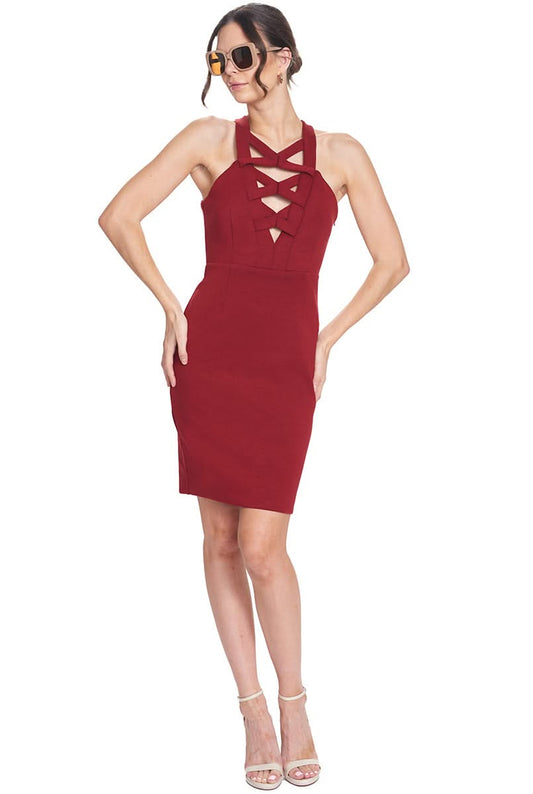
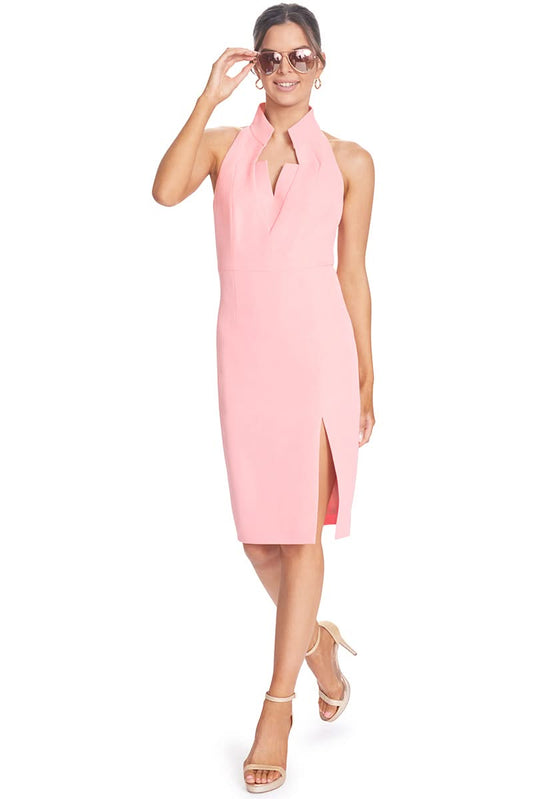
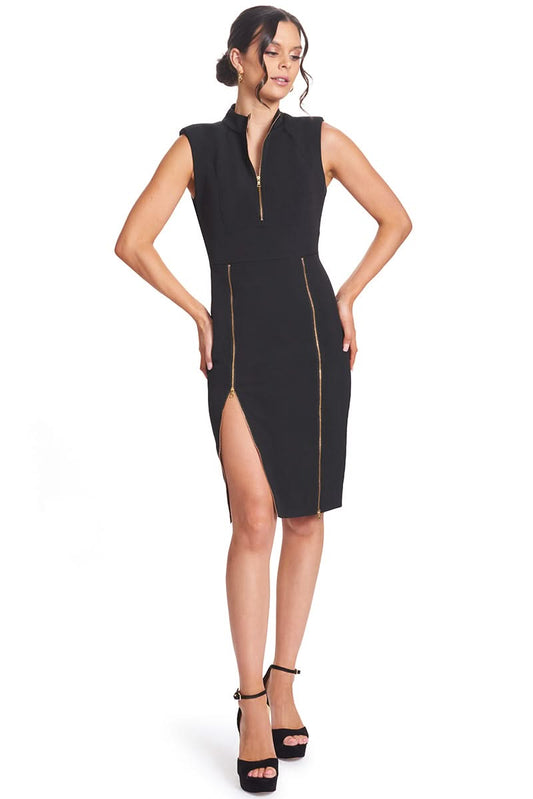
- Sheath dresses: Clean lines that sit close to the body and layer neatly under a jacket. Look for lined versions in wool blends or ponte.
- Midi dresses: Longer lengths add polish and work well with a longer blazer. Check that the fabric has enough weight to hang straight rather than cling.
- Dresses with a defined waist: A belt or waist seam keeps the look balanced when a jacket covers the torso.
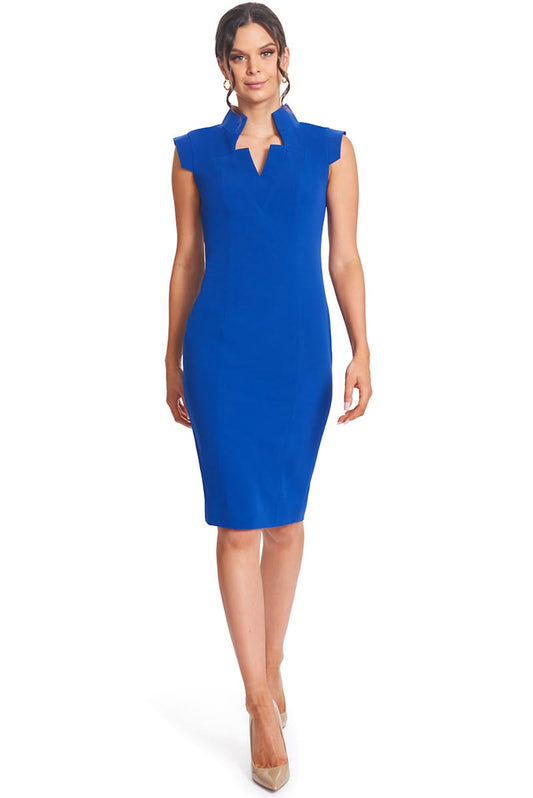
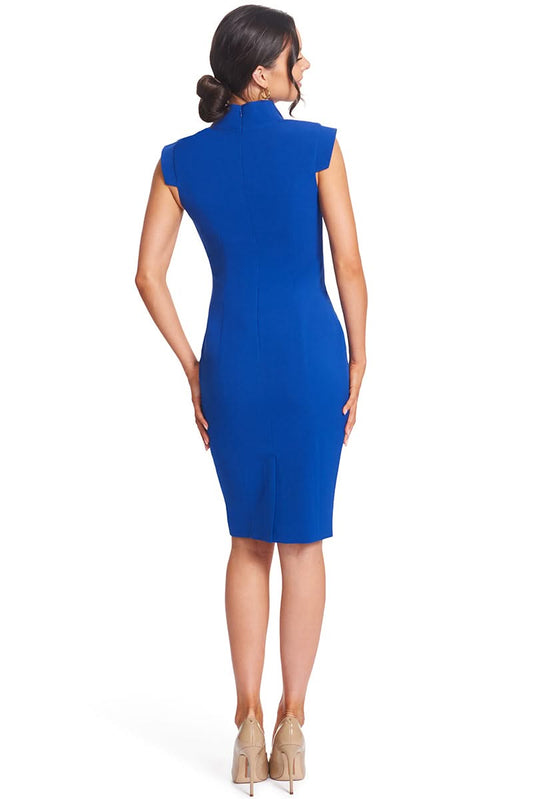
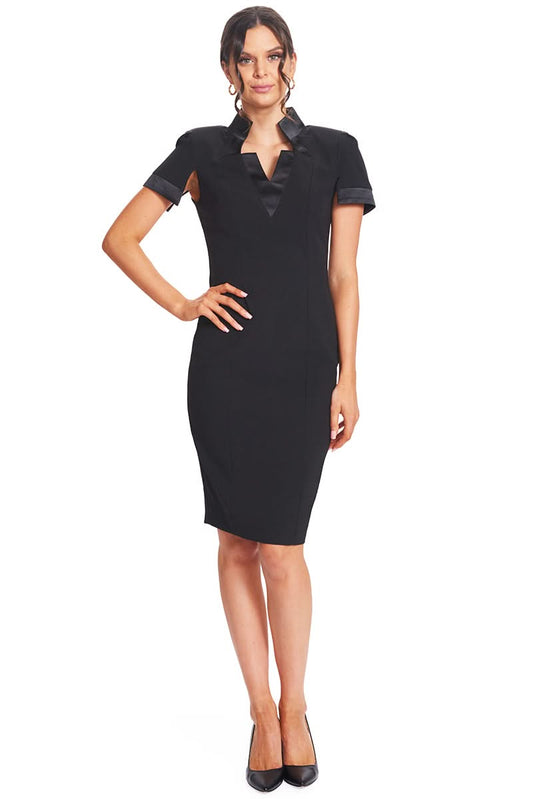
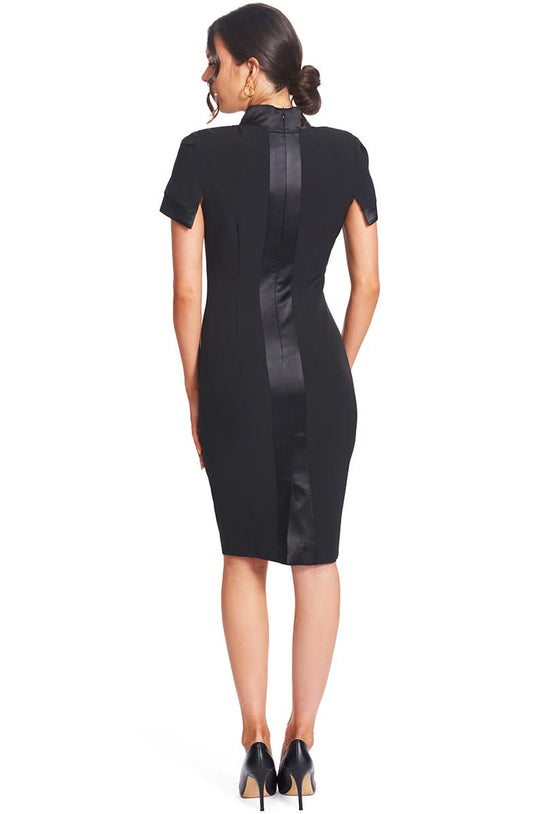
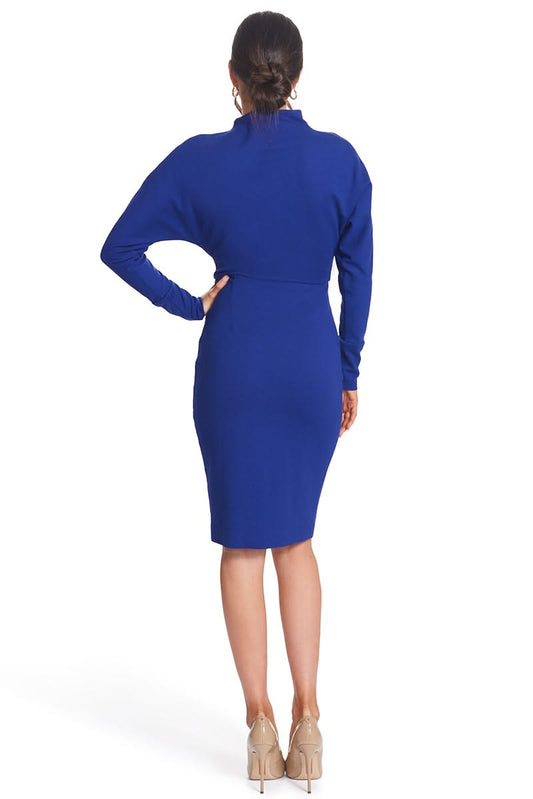
The Nicola Sheath Dress, with its notch neck and elbow-length sleeves, is a dress that can be layered under a blazer for the office.
Step 2: Pick the Right Blazer Length and Silhouette
Blazer length changes the whole look. A longer blazer that covers the hips gives a simplified, tailored shape. A cropped blazer sits at the waist and shows more of the dress, which can help if you want the dress to stay visible.
The Convertible Blazer for Women works in three ways: long for a polished, tailored line, zipped at the midpoint for a modern proportion, or cropped for a different look. It is made of wrinkle-free stretch crepe.

For a clean office look, pick a blazer with a notch neck and a structured shoulder. Soft, unstructured jackets can look casual over a dress, so choose the cut that matches the setting.
Step 3: Balance Proportions So the Blazer Doesn't Look Bulky
Proportion is where most layered looks go wrong. A thick jacket over a loose dress can make the silhouette look heavy. Keep the two pieces balanced:
- Pair a fitted dress with a jacket of the same weight. Avoid a heavy blazer over a thin, clingy dress.
- Check the shoulders first. If the blazer shoulders sit wider than yours, the whole outfit will look oversized.
- Keep the hem lengths in mind. A blazer that ends just below the hip works well with a dress that falls at the knee or below.
Step 4: Style the Midi Dress Layer for Work
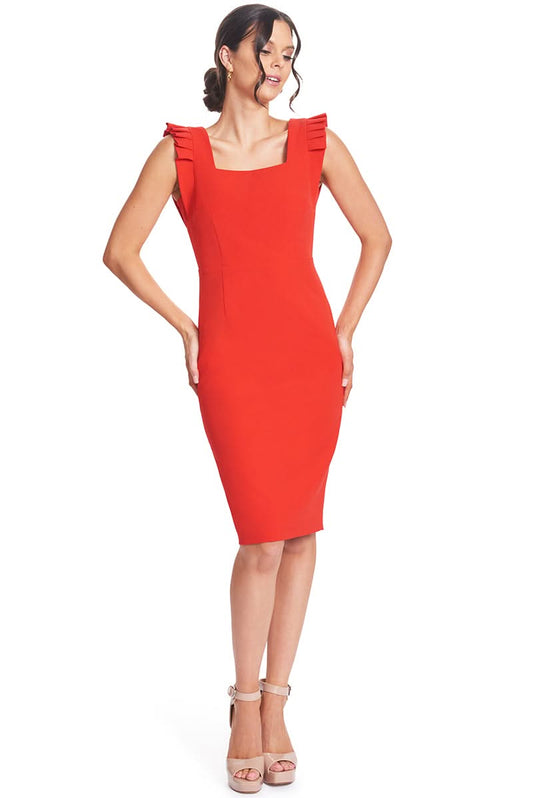
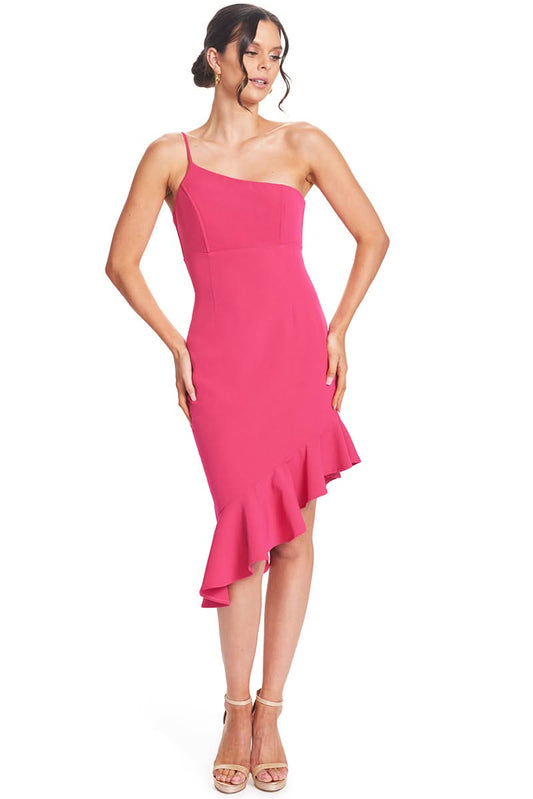
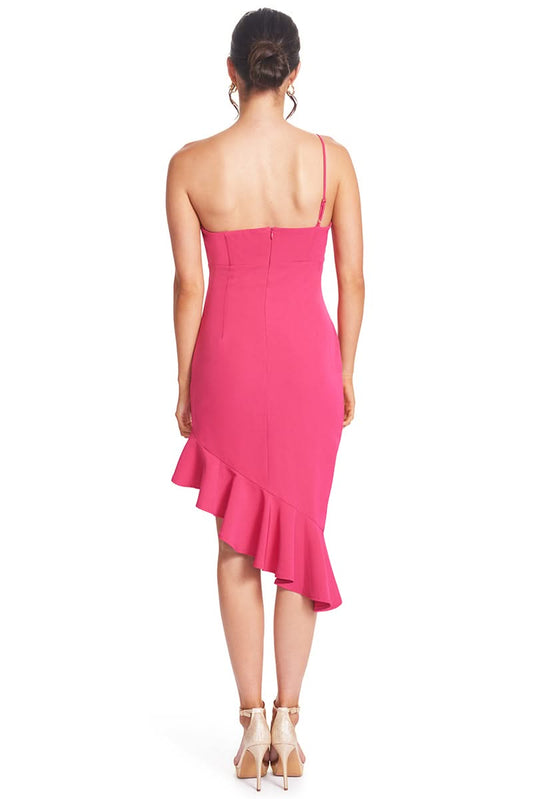
A midi dress gives you length and coverage, which makes it a strong choice for conservative workplaces. Under a blazer, a midi keeps the look modest and polished. The Chelsea Pinstripe Dress, a V-neck cap-sleeve work dress with a self-belt and a ruffle hem, is a dress where the blazer can anchor the outfit.
Convertible Blazer for Women | Wrinkle Free 3-in-1 Long & Cropped Black Blazer →

Leave the blazer open for a more relaxed look, or add heels for an evening out.
Step 5: Finish With Shoes, Accessories, and Colour Choices
The last details tie the outfit together, and they are also where dress-code expectations diverge most. A shoe and bag combination that reads as polished in a business-casual office can feel too relaxed in a conservative one, and vice versa. Use the guidance below to adapt the same blazer-and-dress base to your workplace.
Match the finish to your dress code.
- Business casual: Closed-toe pumps, ballet flats, or low block heels in leather or suede. A structured tote or a medium shoulder bag. Simple stud earrings or a thin chain necklace. Colors can include soft neutrals, muted prints, and one accent piece.
- Business professional: Closed-toe pumps with a modest heel (often 1-3 inches), polished leather. A structured top-handle bag or a clean tote. Fine jewelry only, small earrings, a simple necklace, a classic watch. Stick to navy, black, charcoal, gray, and camel; keep prints to subtle pinstripes or small-scale patterns.
- Conservative or client-facing offices: Lower heels or flats, closed toes, and minimal hardware. A bag that closes securely. Jewelry that does not dangle or make noise. Avoid open-toe shoes, bare legs without hosiery if that is the norm, and anything that draws attention away from your work.
Build repeatable outfit formulas.
- The classic sheath: Lined sheath dress in navy or black + single-breasted blazer in a matching or contrasting neutral + closed-toe pumps + structured tote + stud earrings.
- The midi and long blazer: Midi dress with a defined waist + longer blazer that covers the hips + low block heels or ballet mules + compact shoulder bag + simple necklace.
- The pattern anchor: Pinstripe or subtle plaid dress + solid blazer in a color pulled from the pattern + solid pumps + minimal jewelry. Keep the bag solid and quiet.
- The casual Friday: Jersey or ponte dress + unstructured but clean blazer left open + clean sneakers or loafers + crossbody bag + no visible logos.
Comfort and commute considerations.
A blazer-and-dress outfit has to survive a real day: walking to transit, sitting at a desk, moving between meetings, and temperature shifts. Choose shoes you can walk in for at least ten minutes without discomfort, if you love a higher heel, keep a pair of foldable flats in your bag for the commute.
Color and palette.
Keep the palette simple. Black, navy, and charcoal layer well and read as professional. A neutral shoe in a matching or near-matching tone keeps the line of the leg clean.
- Shoes: Closed-toe pumps, ballet flats, or low block heels suit most offices. Avoid open-toe, strappy, or heavily embellished styles unless your workplace is explicitly creative.
- Jewelry: A small pair of earrings or a simple necklace is enough. Fine metals and quiet stones read as more professional than large or noisy pieces.
- Bag: A structured tote or a compact top-handle bag works for the office and for evening. Avoid oversized slouchy bags or anything with visible logos in conservative settings.
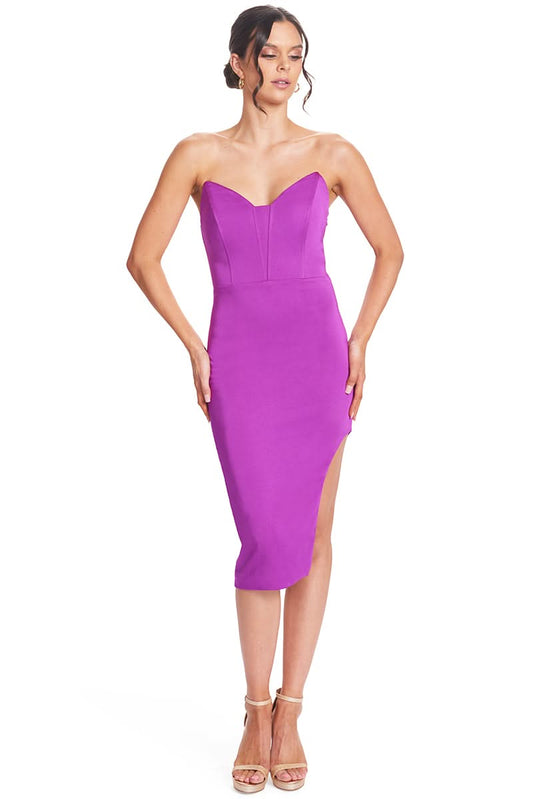
For a dressier evening version, the Eloise Dress in rose is a stretch satin midi mermaid dress with a pussy-bow neck tie.
The same blazer-and-dress base can shift between dress codes, so the finishing details matter most.
| Dress code | Shoes | Bag and jewelry |
|---|---|---|
| Business casual | Closed-toe pumps, ballet flats, or low block heels | Structured tote or medium shoulder bag; simple studs or thin chain |
| Business professional | Closed-toe pumps, modest 1-3 inch heel | Structured top-handle bag or clean tote; fine jewelry only |
| Conservative or client-facing | Lower heels or flats, closed toes | Secure-closing bag; jewelry that does not dangle or make noise |
Common Layering Mistakes to Avoid
Most layering problems are easy to fix once you know what to look for.
- Wearing a blazer that is too tight across the back. Movement should feel easy, so check the fit before you leave home.
- Mixing too many patterns. A striped dress under a plain blazer works, but two busy prints usually compete.
- Forgetting the waist. A dress with no waist definition can look shapeless under a boxy jacket.
- Ignoring the setting. A bold colour may suit a creative office but feel out of place in a conservative one.
Building Your Next Blazer-and-Dress Outfit
Start with one dress you already own and try three blazer lengths over it. Notice which proportion looks most balanced, then build around that. The Convertible Blazer for Women makes this easy because one piece covers three looks. Browse the full blazer range to find more structured options, or explore midi dresses that suit layering. For wider office-ready pieces, Wear To Work gathers options for the workplace. If you want guidance on dressing a dress for the office, how to style dresses for work covers the details in depth.
Frequently Asked Questions
What blazer styles work best with midi dresses?
Structured, single-breasted blazers with a clean notch lapel tend to pair best with midi dresses because they keep the upper body defined without adding bulk. A blazer that hits at the hip or just below works well over a midi, since the longer dress hem already adds length. Lightweight stretch crepe is a practical choice for layering because it moves with you through a full workday. The Convertible Blazer for Women from Simona Maghen, which can be worn long, half-zipped, or cropped, gives you three proportions to test over the same dress before you settle on one for the office.
How do you keep a blazer from looking bulky over a dress?
Start with a blazer that fits your shoulders and skims your torso instead of hanging loose. Choose a dress with a defined waist or a slim, streamlined silhouette so the layers don't compete. Keep the blazer open or leave the bottom button undone to show the dress shape underneath. Avoid thick fabrics stacked on thick fabrics; a crepe blazer over a ponte or satin dress usually reads cleaner than two heavy knits together. Test the combination in a mirror from the side, since bulk often shows most clearly in profile.
Should a blazer be longer or shorter than the dress?
Either can work, but the goal is a clear, intentional line. A longer blazer that covers the hips balances a fitted or shorter dress and creates a streamlined column. A cropped or hip-length blazer shows more of the dress and suits a longer midi or a fuller skirt. Avoid a blazer that ends at almost the same point as the dress hem, because the two lengths can look accidental. Try both proportions before deciding which suits your height and the dress you own.
Can you wear an oversized blazer to the office?
An oversized blazer can work in many offices if the rest of the outfit stays structured. Pair it with a defined waist or a slimmer dress underneath so the volume reads as a deliberate choice rather than an ill fit. Keep the shoulders reasonably aligned with your own, since extreme shoulder width is what tends to look most dated. In more formal settings, a closer-fitting blazer in a neutral colour such as black, navy or charcoal is the safer choice for client meetings and presentations.
