
Tips for Finding Flattering Work Clothes
Table of Contents
- Why Flattering Work Clothes Start With Fit, Not Size
- Work Clothes That Fit Well: A 5-Point Check Before You Buy
- How to Find a Clothing Style That Suits You at Work
- Match Your Work Clothes to Your Workplace Dress Code
- Shopping for Work Clothes Online Without the Guesswork
- Build a Versatile Work Wardrobe Around a Few Anchor Pieces
- Comfort, Care, and Cost Per Wear: What Keeps Clothes Flattering
- Conclusion: Dress for the Day You Actually Have
- Frequently Asked Questions
Last Updated: October 5, 2026
Why Flattering Work Clothes Start With Fit, Not Size
At Simona Maghen, we build every piece around structure and clean lines. But structure only works when the fit is right.
Fit beats size: a size 10 tailored to your shoulders looks sharper than a size 6 that pulls across the chest.
Most shoppers buy for the size they wish they were, not the body they have, ending up with clothes that zip but never sit right.
How to Read a Size Chart and Take Your Own Measurements
A size chart is a starting point, not a verdict. Brands cut differently, and vanity sizing has made tag numbers nearly meaningless.
Take three measurements with a soft tape:
- Bust: around the fullest part, tape level
- Waist: at your natural bend, not your pants line
- Hips: around the fullest point, usually 7 to 9 inches below the waist
Write them down. Compare against each brand's own chart before you order.
Work Clothes That Fit Well: A 5-Point Check Before You Buy
Work clothes that fit well pass five checks: shoulders, bust, waist, hips, and length. If a garment fails on shoulders, walk away. Everything else can be altered.
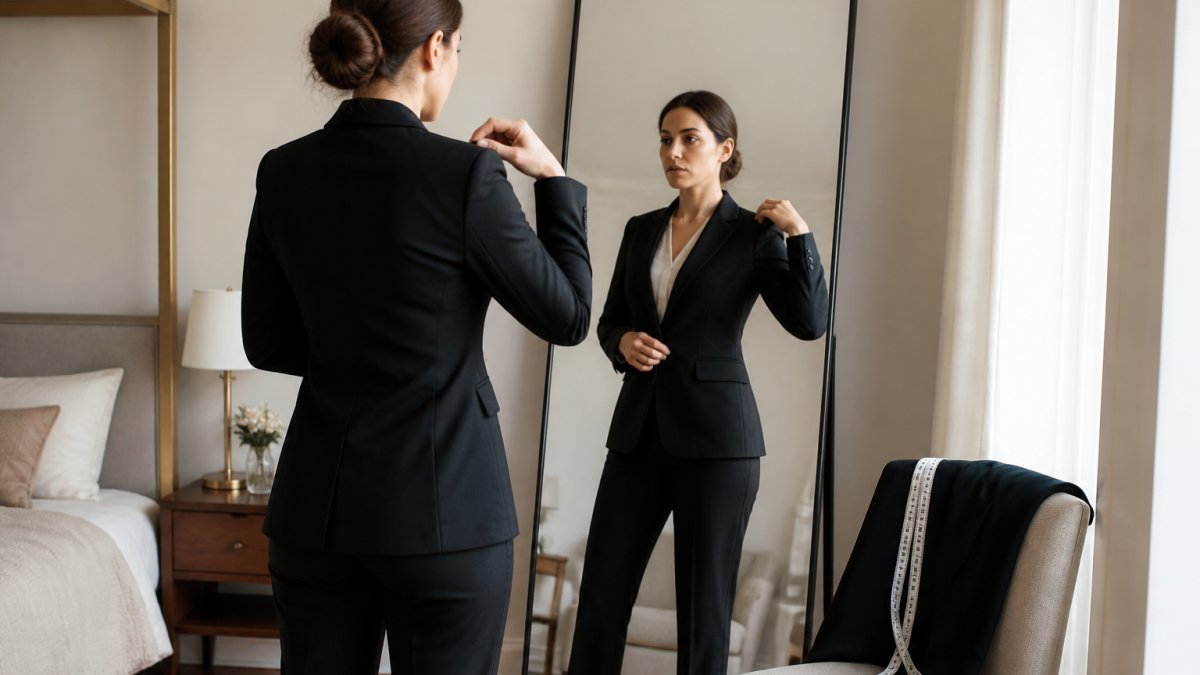
Run this list before you buy:
- Shoulders: the seam should sit at the edge of your shoulder bone
- Bust: no pulling or gaping at the button line
- Waist: fabric should skim, not squeeze
- Hips: pockets should lie flat, not flare
- Length: hems should hit where the designer intended
Shoulders, Bust, Waist: Where Fit Actually Breaks Down
Shoulders are the hardest fix. A tailor can take in a waist or shorten a hem, but rebuilding a shoulder line rarely ends well.
Bust fit fails two ways: gaping buttons or tight pull lines. Both signal the wrong cut, not the wrong size.
Waist fit is more forgiving, a self-belt or defined seam creates shape without a trip to the tailor.
How to Find a Clothing Style That Suits You at Work
Finding a clothing style that suits you at work means solving two problems: what flatters your proportions and what your workplace will accept. Most style advice ignores the second; women who consistently look sharp solve both.
Start with proportions, then filter by environment.
Match Cuts to Your Proportions, Not Trends
Flattering cuts follow a few principles: they create a vertical line, define a waist without squeezing, and balance volume on top with volume on the bottom.
Patterns that work across body types:
- If you're petite (roughly under 5'4"), look for monochrome outfits, higher waistlines, and hems that stop at the narrowest part of your leg. A long blazer worn open over a column of one color adds height without looking like you borrowed someone else's jacket.
- If you're tall, you can carry longer blazers, wider-leg trousers, and larger-scale patterns that would overwhelm a smaller frame. Use horizontal breaks, a belt, a tucked shirt, a cropped jacket, to keep long lines from reading as one flat column.
- If you carry weight through the middle, look for structured shoulders, princess seams, and wrap or faux-wrap fronts that create a diagonal across the torso. Skip stiff fabrics that stand away from the body.
None of these rules are absolute. They're starting points. The test is always the same: does the garment follow your body's lines, or fight them?
Balance Personal Style With Workplace Expectations
Personal style at work isn't about trends but repetition with intention. Women who always look polished own fewer pieces, wear them more, and express personality through details rather than silhouette experiments.
How to bring your style into a dress-coded environment:
- Pick one signature element, a color, a jewelry style, a shoe shape, a scarf, and repeat it. One consistent detail reads as style; five competing details read as noise.
- Keep the silhouette conservative and the details personal. A structured blazer in an unexpected color, or a classic sheath with a distinctive belt, does more for your look than a bold cut that pushes against the code.
- Use color deliberately. Neutral colors (black, navy, charcoal, camel) mix without effort and form the base of a work wardrobe. One accent shade keeps outfits from feeling flat. Simple patterns like pinstripe or fine checks add interest without noise.
Researchers studying why people wear what they wear have found that clothing choices connect to personality and self-expression. Your work wardrobe should reflect yours, within the boundaries your workplace sets.
Match Your Work Clothes to Your Workplace Dress Code
Dress codes aren't one ladder from casual to formal, they vary by industry, company culture, and even day of the week. A flattering outfit that reads polished at a law firm can read overdressed at a startup and underdressed at a bank.
Observe, don't guess: look at what people one or two levels above you wear on a normal Tuesday, not what the CEO wears in a press photo. That's your real target.
How Dress Codes Actually Differ by Industry
Law, finance, and consulting tend toward business formal or a structured business casual.
Corporate and government offices usually sit at business casual. Tailored trousers, blazers, button-downs, and knit dresses all fit.
Tech, media, and creative fields often run casual or "smart casual." Denim, clean sneakers, and softer knits are normal.
Healthcare, education, and retail add their own constraints, closed-toe shoes, modesty requirements, or uniforms, that override general style advice.
| Setting | Typical Code | Flattering Anchor Pieces | Common Mistakes |
|---|---|---|---|
| Law, finance, consulting | Business formal to structured business casual | Tailored blazer, sheath dress, suit trousers | Open-toe shoes, wrinkled fabric, casual knits |
| Corporate, government | Business casual | Blazer, button-down, tailored trousers | Denim on non-denim days, athletic shoes |
| Tech, media, creative | Casual to smart casual | Dark denim, merino sweater, simple blouse | Gym wear, graphic tees with slogans |
| Healthcare, education, retail | Role-specific, often uniformed | Easy-care knits, closed-toe flats, layers | Ignoring handbook rules, uncomfortable shoes |
Dressing for Hybrid and Remote Workdays
Hybrid schedules mean one person needs two wardrobes, or one that flexes. The answer is a small set of pieces that read well on camera and in person.
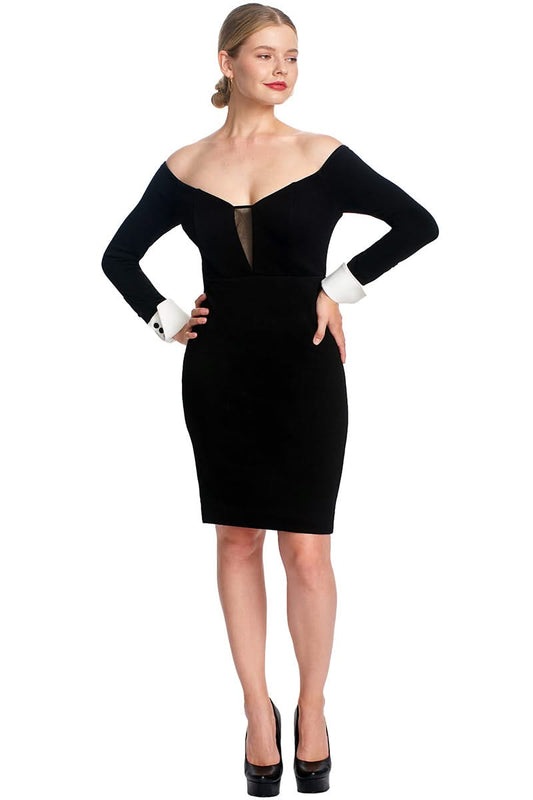
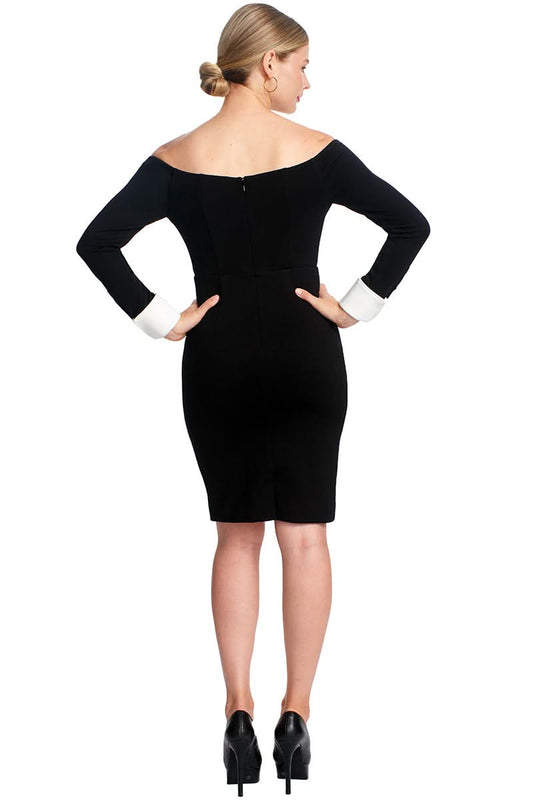
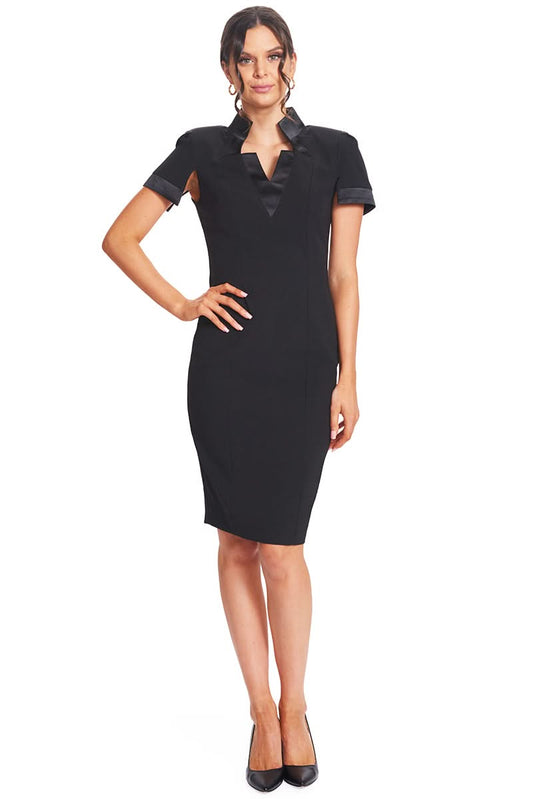
Nicola Sheath Dress - Elbow sleeve, notch neck Ponte dress with contrast velvet →

On video, the camera crops you at the chest and shoulders, so shoulder structure, a clean neckline, and a color that separates from your background matter more than the bottom half.
For fully remote roles, the dress code is your own routine.
Reading the Unwritten Rules
Written dress codes rarely cover the details that matter most. Signals to watch:
- What people wear on client-facing days versus internal days, the gap tells you where the real bar sits.
- Whether leadership dresses up or down, in many offices, the senior team sets the ceiling, not the floor.
- Seasonal shifts, summer often relaxes the code; the first cold week resets it.
When in doubt, ask a trusted colleague. One question saves a closet full of wrong purchases.
Merino wool sweaters and button-down shirts carry across nearly every setting on this list. That's why they earn their space in a work wardrobe that has to flex.
Shopping for Work Clothes Online Without the Guesswork
Check four things on every product page:
- Fabric content and stretch
- Model height and the size she's wearing
- Garment measurements, not just size labels
A model at 5'9" wearing a size 2 shows how a piece drapes on a tall frame; at 5'4", expect the hem to sit lower than the photo suggests.
Free exchanges change the math. Simona Maghen offers free ground shipping and free exchanges on all U.S. orders, so trying a size and swapping it costs nothing but time.
Research published through PubMed Central on dress and person perception shows clothing shapes how others read us.
Build a Versatile Work Wardrobe Around a Few Anchor Pieces
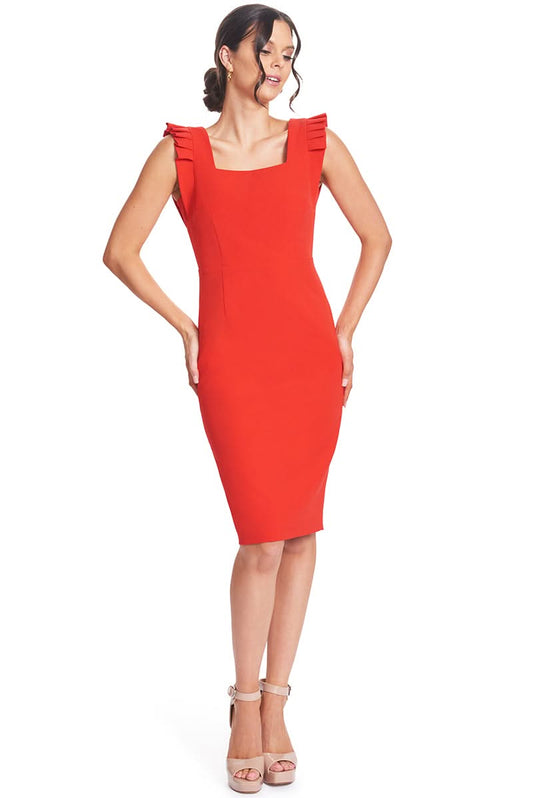
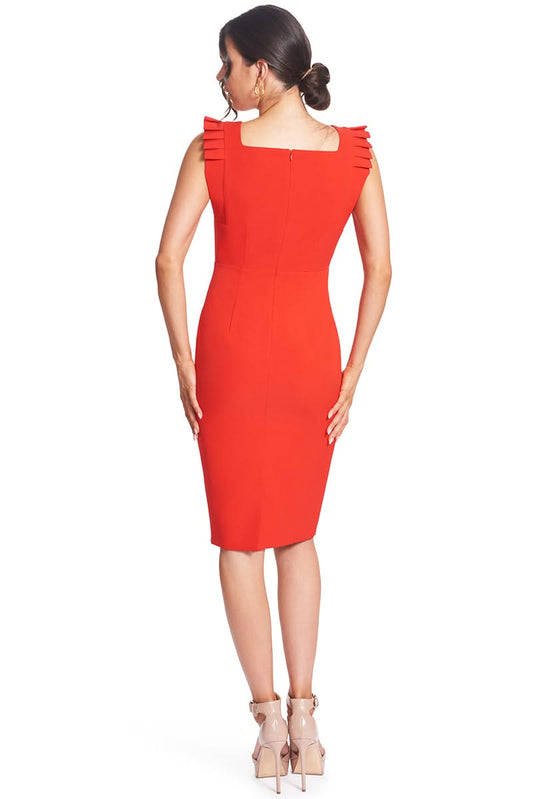
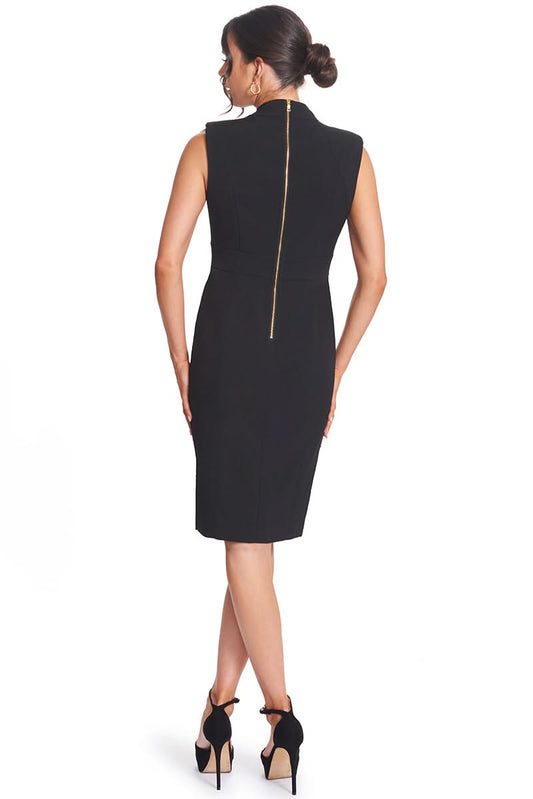
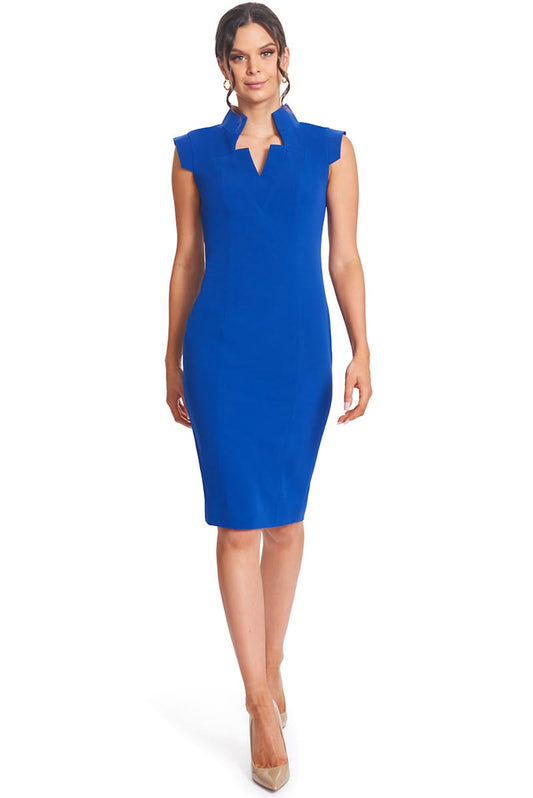
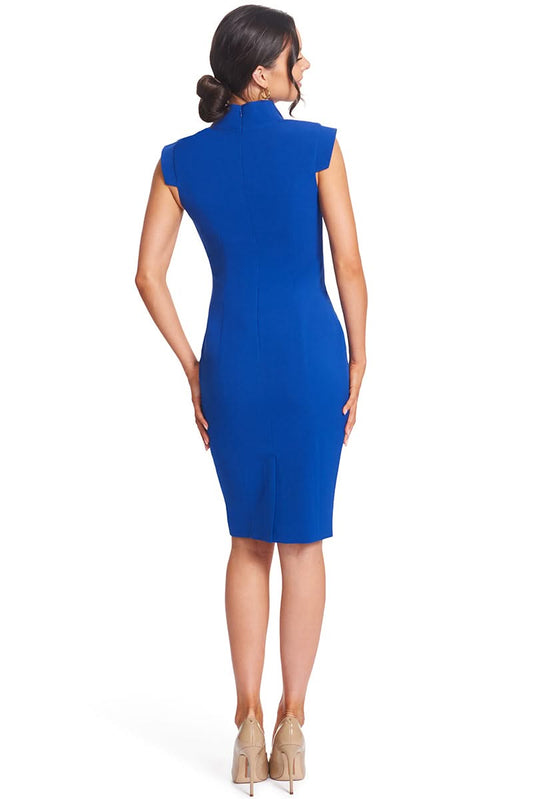
A versatile work wardrobe is built on anchors: a tailored blazer, a sheath dress, well-fitted trousers, and one great knit.
Anchors earn their place by working across settings. A blazer over a dress reads formal.
Our Convertible Blazer for Women is the clearest example we make.

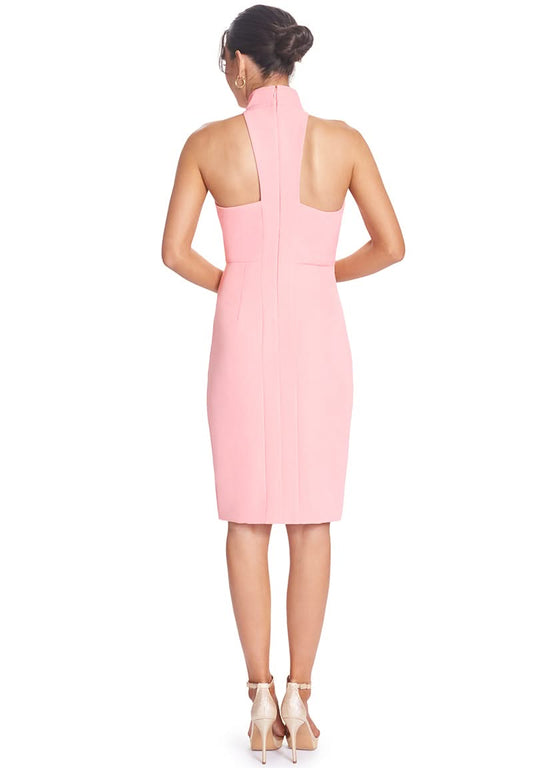
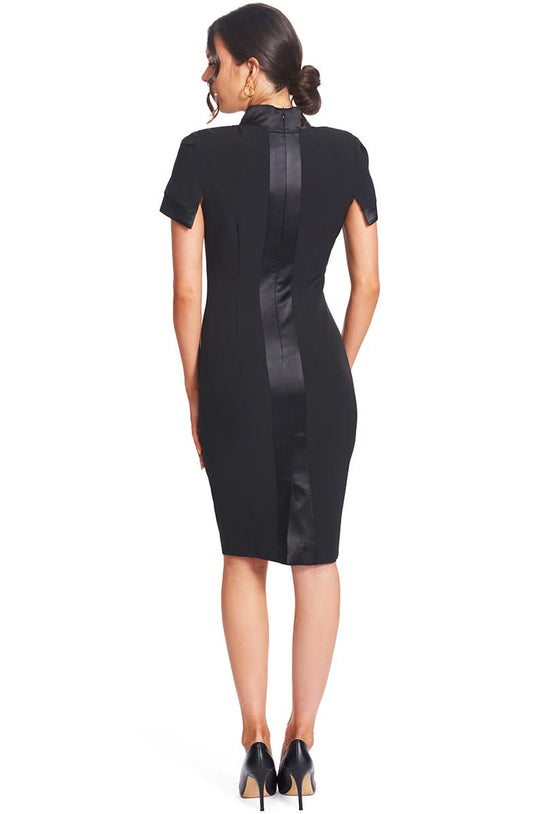
The Nicola Sheath Dress plays the same role in dress form: velvet bands and a velvet belt give it evening presence, while the ponte fabric holds its shape through a full day.
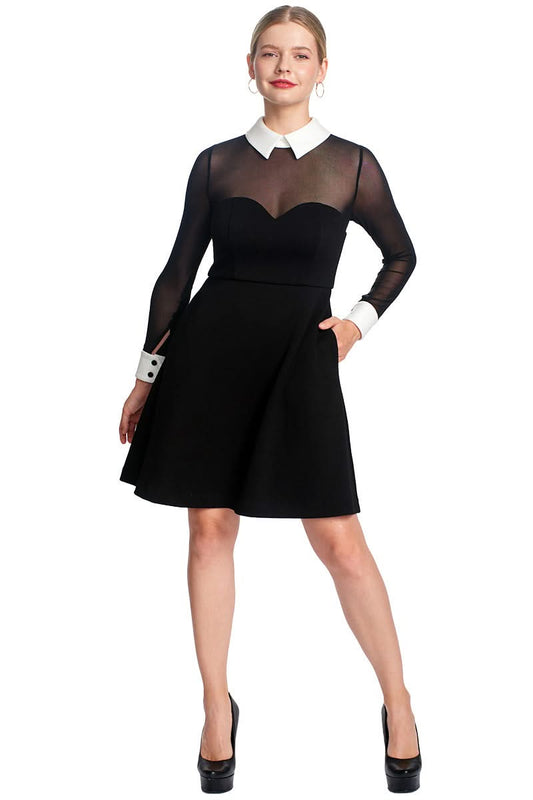
For warmer offices, the Gina Dress brings an A-line fit, side slit pockets, and three-quarter bell sleeves.

Comfort, Care, and Cost Per Wear: What Keeps Clothes Flattering
Comfort and care decide whether a garment still looks flattering in month six.
Cost per wear is the honest math. Divide the price by the number of times you'll actually wear it.
Care rules that protect your investment:
- Dry clean structured pieces like blazers and lined dresses
- Hand wash cold and lay flat to dry when the label allows
- Hang, don't fold, tailored trousers
Stitch Fix's 2026 fall workwear guide points to tailored trousers and knit dresses as core pieces this season.
Pressed clothes matter as much as fit: a perfectly tailored blazer loses its edge if it's creased.
Conclusion: Dress for the Day You Actually Have
Your calendar changes daily. A morning meeting, a client lunch, an evening event. Building a wardrobe that handles all three takes fewer pieces than most women expect.
Simona Maghen designs for exactly that rhythm: timeless structure, feminine detail, and pieces that move from office to after-hours without a change.
Shop the collection and build a work wardrobe that works as hard as you do.
Frequently Asked Questions
How can you tell if work clothes fit properly?
Check five spots. The shoulder seam should sit at the edge of your shoulder bone, not past it. A button-down should close without pulling across the chest. Sleeves should end at the wrist bone. Trousers should skim your hips without wrinkling at the crotch. Sit down, raise your arms, and walk a few steps before deciding. If the fabric pulls, gaps, or bunches during normal movement, the size is wrong, not your body.
What should you look for when shopping for work clothes online?
Start with a detailed size chart and compare it to your own measurements, not your usual size. Look for garment length and model height so you can judge proportion. Check the fabric content, since stretch crepe and Ponte hold structure better than thin knits. Read the return and exchange policy before ordering. A brand that offers free exchanges on U.S. orders, like Simona Maghen, removes most of the risk of buying a dress or blazer you have not tried on.
How can you make a small work wardrobe feel more versatile?
Choose pieces that change shape or function. A convertible blazer that wears long, half-zipped, or cropped gives you three silhouettes from one garment. Neutral colors like black, charcoal, and olive mix with almost anything. Add layering pieces, a merino wool sweater or a chic blouse, so the same tailored trousers read differently across the week. Fewer, better pieces worn more often beats a closet full of single-use outfits.
What are common mistakes people make when dressing professionally?
Buying for a size label instead of a fit, ignoring the dress code of your specific workplace, and skipping tailoring on an otherwise good garment. Another frequent error is shopping only for the office, which leaves you without anything for an after-work event. A sheath dress with velvet detailing or a blazer that works over both a dress and trousers covers more of your actual calendar. Pressed, clean clothes matter as much as the cut.