

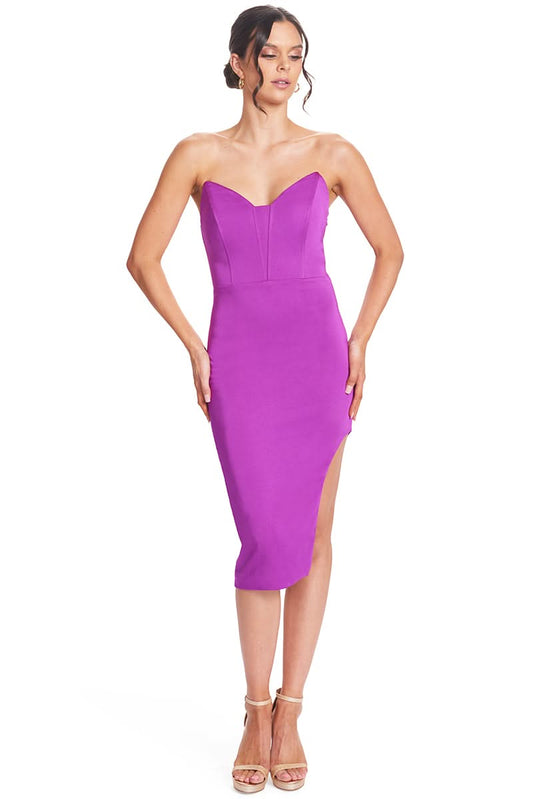
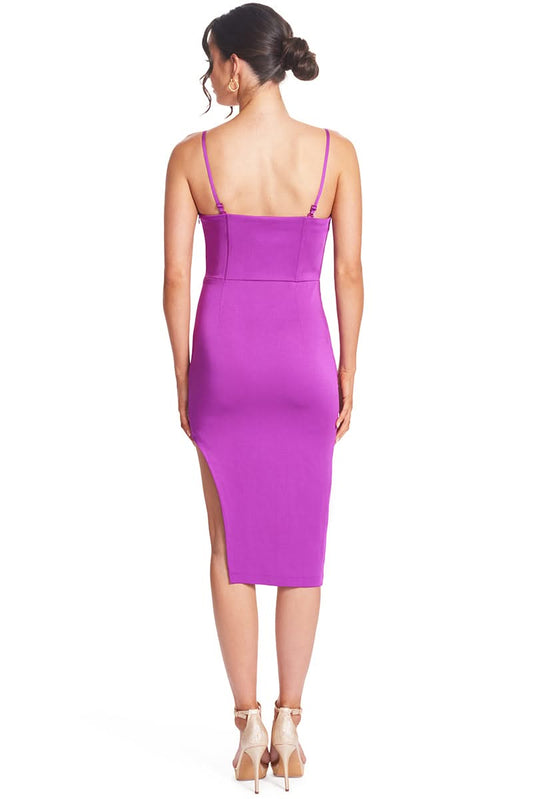
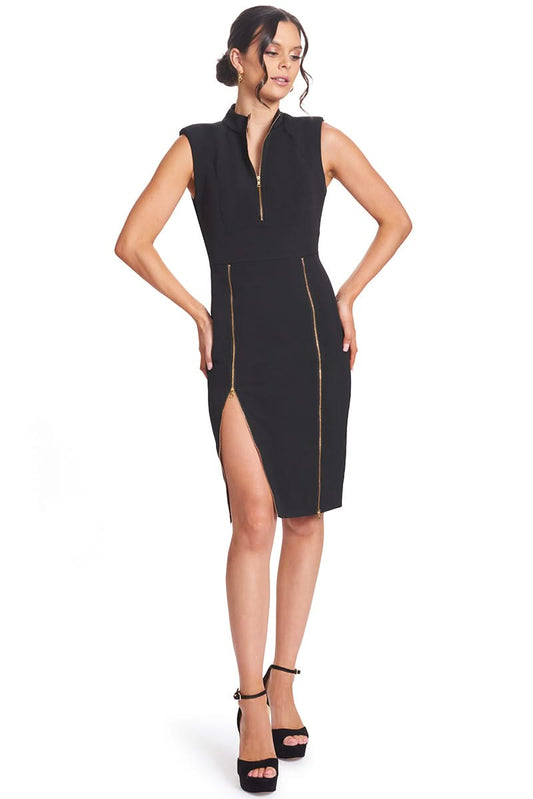
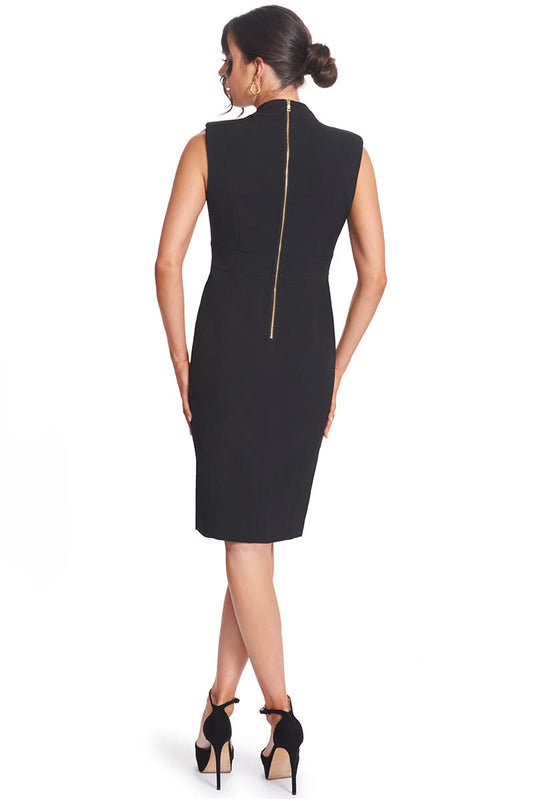

The Black and White Tuxedo Dress: Authority, Ease, and the Art of Getting It Right
What a Black and White Tuxedo Dress Actually Delivers
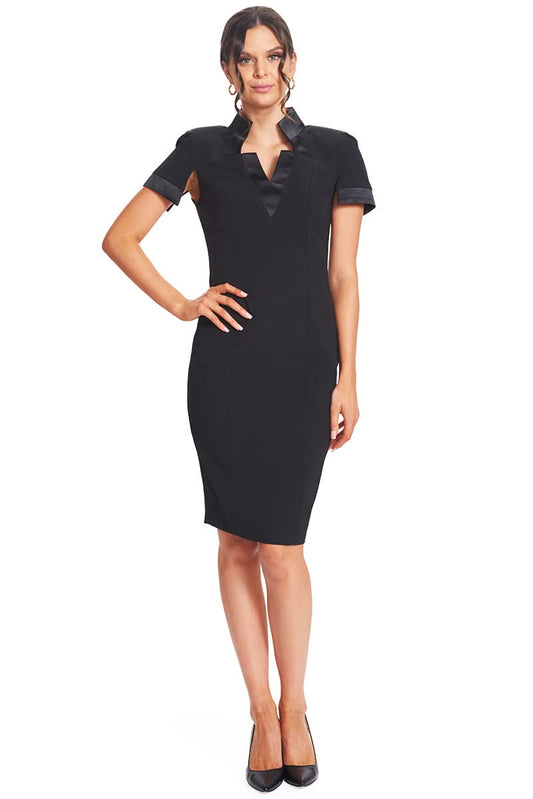
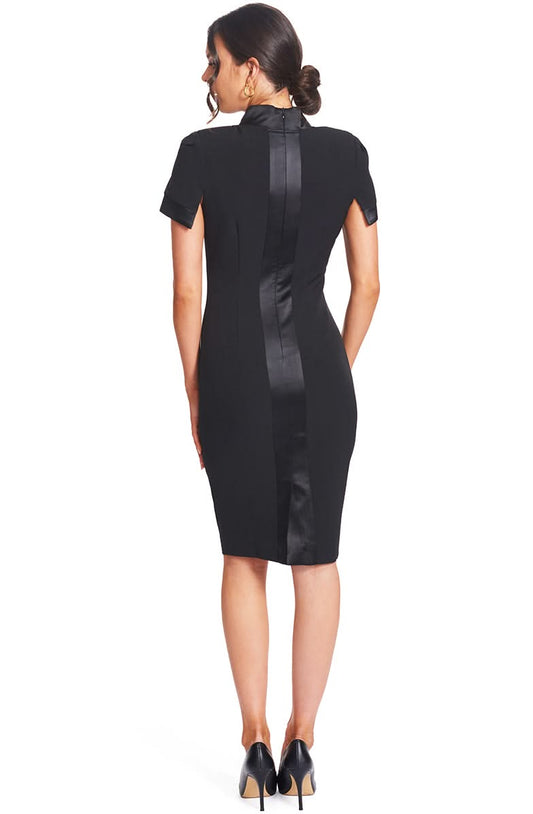
The black and white tuxedo dress is one of the most precisely positioned garments in women's formalwear. It is not simply a black dress with white trim. It is a silhouette that borrows the structural authority of classic tuxedo tailoring, the notched collar, the contrast facing, the reduction of color to its most deliberate form, and translates that into a dress that a woman can wear with full confidence across a genuine range of formal and semi-formal occasions.
That precision matters. Most cocktail dresses occupy one context well and struggle in others. The tuxedo dress operates differently. The design language it inherits is inherently cross-contextual: polished enough for a corporate gala, considered enough for a wedding, and sharp enough for an upscale evening event without requiring any change in styling approach.
What we have observed, both in how women respond to this silhouette and in how consistently it performs across real occasions, is that the tuxedo dress resolves one of the most persistent frustrations in formal dressing: the tension between looking authoritative and feeling comfortable. It does both. That is rarer than it sounds.
Understand the Design Language Before You Shop
Tuxedo tailoring has a specific visual grammar. It is not a mood or an aesthetic direction. It is a precise set of design elements, each with a defined function, that together produce the authority the silhouette is known for. Understanding those elements makes the difference between choosing a dress that works and choosing one that merely gestures at the idea.
The contrast collar is the primary structural signal. On a dinner jacket, it frames the shirt and tie. On a dress, it does the same job for the face and neckline: creating a defined architectural line that communicates polish without requiring jewelry or additional framing to complete it. A well-executed contrast collar is self-finishing. That is not a small thing.
The black and white palette is the second signal, and it operates differently from color. Color communicates mood. Black and white communicates decision. The reduction of the palette to its most elemental contrast reads as intentional in a way that most other color combinations cannot replicate. It is the visual equivalent of speaking clearly and directly.
Contrast cuffs, when present, anchor the sleeve at the wrist with the same logic the collar uses at the neckline. Together, they create a frame around the entire garment, top and bottom, that reads as complete and considered from every viewing angle.
The best tuxedo dress is not the one with the most detail. It is the one where every detail is doing exactly the right amount of work.
Choose the Right Silhouette for Your Occasion Range
The tuxedo dress comes in several silhouettes, and the choice between them is not primarily aesthetic. It is functional. Each silhouette has a different performance profile, and matching that profile to the occasions you actually attend is the most important decision in the purchase process.
|
Silhouette |
Best Occasions |
Key Trade-Off |
|
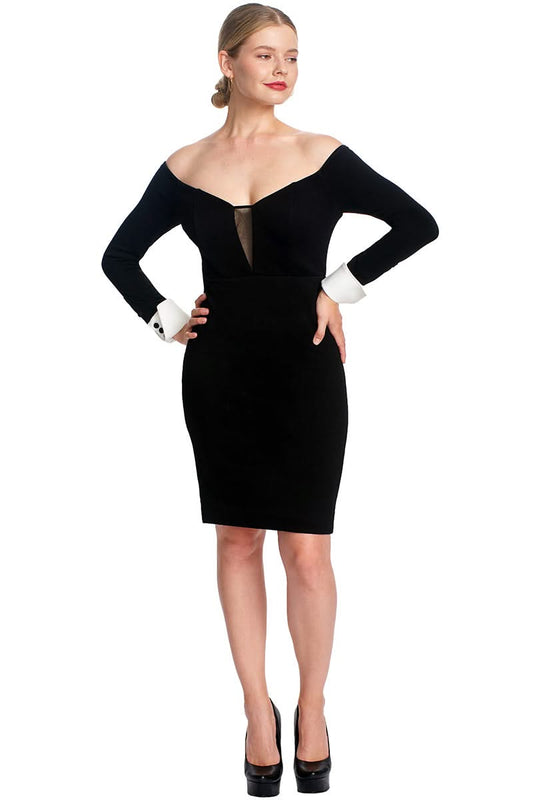
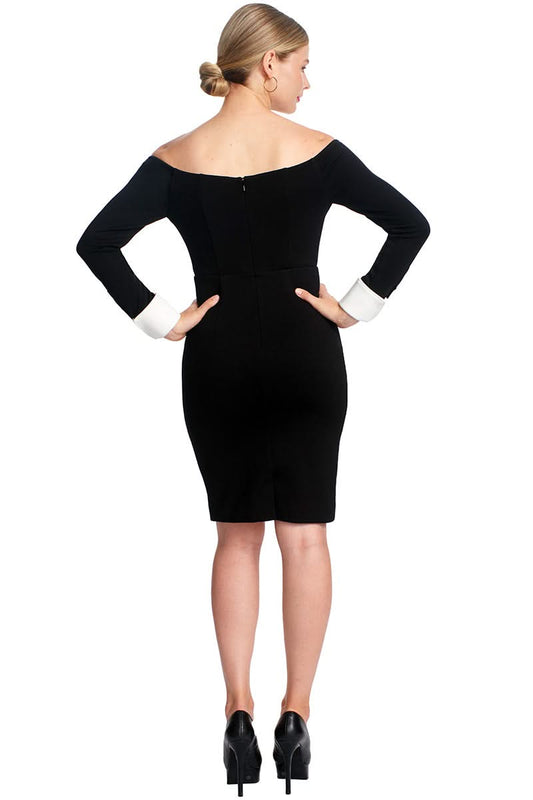
Off-the-shoulder Sheath |
Date night, cocktail party, evening spring party, formal dinners, engagement parties, weddings |
Requires precise fit; restricts movement over long events. |
|
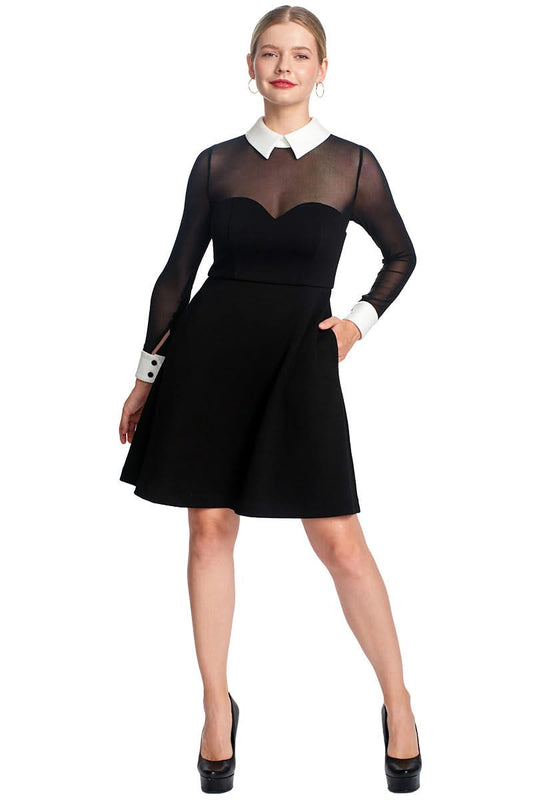
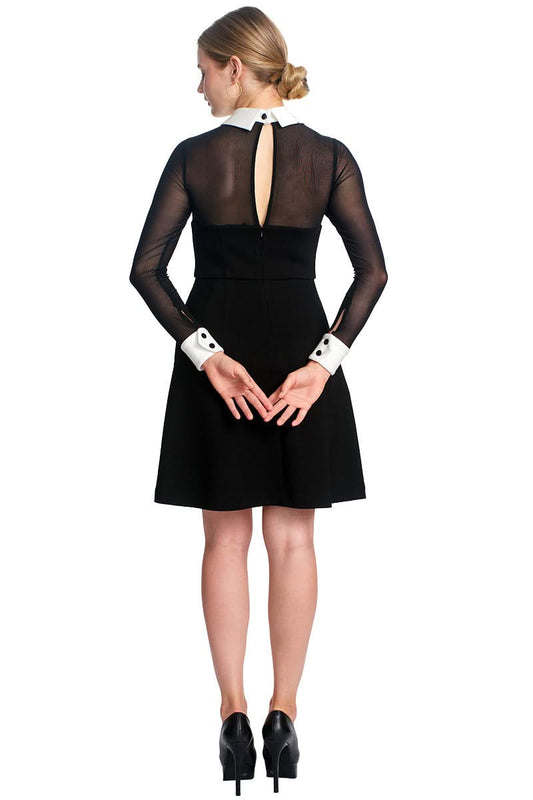
Fit and Flare |
Cocktail parties, weddings, date nights, evening events, daytime formal, business dinners, corporate galas, charity events, gallery openings. |
More forgiving in fit; skirt provides full movement range, and has functional pockets. |
|
Midi Sheath |
Business dinners, gallery openings, semi-formal occasions, corporate galas, weddings engagement, charity event. |
Elongating and versatile; reads sophisticated & polished. |
Although all are versatile, the fit and flare is the highest-performing silhouette for most women's real occasion mix. It is fitted through the bodice and waist, which creates the same structured upper-body read as a sheath, and then flares at the hip, which provides unrestricted movement across a full evening. Given that it also has side slit pockets, this dress is also functional. The combination of visual structure physical ease and functionality is what makes it the most dependable choice when the occasion requires looking authoritative, but allows lasting comfortably for hours.
The sheath delivers the cleanest line and the off-the-shoulder sheath demands the most from fit. A sheath that does not sit precisely reads as uncomfortable rather than polished. Unless tailoring is part of the plan, the fit and flare provides a more reliable result across a broader range of body proportions.
Decode the Fabrication: Why Ponte Outperforms
Fabrication is the decision that determines how a dress performs in practice rather than in theory. Most women assess fabric by how it looks and feels at the point of purchase. The more relevant question is how it behaves after three hours of continuous wear, through a seated dinner, a reception, and a room at 72 degrees.
Ponte is a mid-heavy double-knit fabric made from a rayon, nylon, and spandex blend. It occupies a category that most formal fabrics cannot access: it has the clean visual weight of a woven, the recovery of a knit, and the sculpting effect of a compression layer, all without the rigidity that makes structured dresses uncomfortable over time.
The case for Ponte over alternatives
Against crepe: Crepe holds its shape but has limited stretch. Over a long event, crepe can feel restrictive as the body moves and temperature rises. Ponte accommodates both without losing its structure.
Against scuba: Scuba has a similar weight but a plasticky hand that reads as less refined at close range. Ponte drapes and photographs with more warmth and depth.
Against chiffon or georgette: Lightweight fabrics read as spring-appropriate but offer no sculpting effect and behave unpredictably in movement and wind. Ponte is consistent in every condition.
Against brocade or jacquard: Heavy wovens look formal but restrict movement significantly and retain heat. Ponte provides comparable visual weight with a fraction of the physical burden.
The lining at the bust is a detail worth noting. Ponte against skin at the chest without an interior layer can feel heavy and warm. A lined bust resolves that and improves the interior quality of the dress in a way that is immediately perceptible when worn.
From a consulting standpoint, fabrication is where the cost-per-wear calculation is actually determined. A Ponte dress worn fifteen times over two years has a fundamentally different value equation than a lightweight dress purchased for a similar price and worn twice before losing its shape.
Navigate the Styling Logic: Restraint as Strategy
The styling principle for a black and white tuxedo dress is reduction, not addition. The contrast collar frames the face. The satin or contrast trim provides visual interest. The silhouette creates the focal point. Every accessory added beyond those anchors is competing with the design rather than completing it.
This is the mistake most women make with a tuxedo dress: they approach it as a foundation and layer on top of it. The tuxedo dress is not a foundation. It is already a complete design statement. The stylist's job is to support it at the margins, not to build on top of it.
Footwear
A pointed-toe pump in black or red is the direct pairing. Black maintains the monochrome logic of the tuxedo reference. Red introduces a deliberate contrast note that works in tension with the off-white collar. A block heel or kitten heel provides practicality without breaking the visual line. Avoid anything with significant platform height, which shifts the proportional balance of a midi silhouette.
Jewelry
The collar eliminates the need for a necklace. Short drop earrings or small studs are the correct call. One piece at the wrist, a fine bracelet or a slim cuff, works with the contrast cuff detail. The rule: one point of jewelry emphasis, chosen for the face, not the outfit.
Bag
Small and structured. A clutch or a compact crossbody in black or metallic. The Fit & Flare Tuxedo Illusion Dress has pockets, which removes the functional pressure from the bag entirely. Treat it as a finishing note rather than a practical tool.
Outerwear
A cape, caplet or long coat works well with any of the tuxedo dresses. A red long coat introduces a warm contrast note that works with the off-white collar. Avoid a outwear piece that is casual in anyway, including in weight. The dress is precise; the outerwear should at least approach that standard.
Map the Occasions Where This Dress Belongs
Clarity about where a garment works and where it does not is a more useful service than a generic versatility claim. The tuxedo dress has a genuine range, but it has limits, and understanding both allows for better purchase decisions.
|
Occasion |
Performance |
Notes |
|
Corporate galas, award dinners & charity events |
Excellent |
Tailoring reference reads as authoritative. Midi length avoids formality ambiguity |
|
Cocktail parties |
Excellent |
The contrast detail and structured silhouette are exactly calibrated for this format |
|
Wedding guest (cocktail attire) |
Excellent |
Black and white is distinct without competing. Midi reads as considered |
|
Business dinners and client events |
Excellent |
Commands the room without requiring explanation or accessory support |
|
Date nights at upscale venues |
Excellent |
The illusion of effortlessness the design creates is precisely right |
|
Holiday parties |
Strong |
The dress handles festive settings without relying on embellishment |
|
Black-tie formal events |
Limited |
Floor-length gown remains correct for white or strict black-tie |
|
Casual or outdoor social settings |
Not appropriate |
Structure exceeds the occasion. Will read as overdressed rather than chic |
Avoid the Common Mistakes Women Make With This Silhouette
The tuxedo dress category is well-defined enough that the errors women make with it tend to cluster around a few consistent patterns. Knowing them in advance prevents the most common points of dissatisfaction.
Choosing by print or embellishment over construction: The tuxedo dress's authority comes from its design logic, not decoration. A dress with added embellishment on top of a tuxedo reference usually dilutes rather than enhances it.
Sizing for the smallest point rather than the most critical fit zone: In a fit and flare, the bodice and waist are where the fit must be precise. The skirt has tolerance. Sizing up for shoulder or bust width and having the waist taken in produces a better result than the reverse
Over-accessorizing to compensate for uncertainty: Women who are not fully confident in how the dress reads sometimes add accessories to fill perceived gaps. The tuxedo dress does not have gaps. Additional accessories create visual noise rather than clarity.
Wearing the dress to occasions that exceed its formality ceiling: The tuxedo midi is a cocktail dress. It is exceptional in that regard. Attempting to wear it to strictly black-tie events places it in a context where the formality mismatch works against it.
Neglecting fabric care over time: Ponte with spandex content degrades when exposed to high heat in drying. Machine wash gentle, cold water, laid flat or hung to dry. Steam rather than iron. These are not complicated requirements, but skipping them shortens the useful life of the dress materially.
Understand How Tuxedo Dressing for Women Is Evolving
The tuxedo reference in women's fashion has a documented history that stretches back to Yves Saint Laurent's Le Smoking in 1966. What that moment established was not just a garment but a permission structure: the idea that women could wear the visual language of masculine formal authority without apology and without irony.
That permission structure has fully normalized. Today, the black and white tuxedo dress does not read as a statement about gender or convention. It reads as the choice of a woman who knows what she wants and has found a garment that delivers it. The declaration has dissolved into confidence.
Several forces are reshaping the category in ways that will determine what the tuxedo dress looks like over the next several years:
Technical fabrication is replacing traditional formal fabrics: The demand for garments that hold their structure and remain comfortable across long events is pushing the category toward ponte, scuba-crepe hybrids, and performance-adjacent fabrics. The visual standard of tailoring is being preserved; the physical experience of wearing it is improving significantly.
Occasion fluidity is expanding the dress's range: As formal dress codes have loosened across most professional and social environments, the tuxedo dress is being asked to navigate more mixed-formality contexts. Its inherent versatility makes it one of the better-positioned silhouettes to handle that demand.
Investment dressing is reshaping purchase behavior: Consumer research consistently shows a shift toward fewer, more considered purchases evaluated on cost-per-wear and functional range. The tuxedo midi scores well on both counts, which is why it is gaining ground in the market relative to trend-driven alternatives.
Silhouette diversification is expanding within the category: The notched collar and contrast trim remain the constant signals, but variations in skirt volume, sleeve construction, and proportion are growing. The fit and flare is currently the highest-performing variant, but the category will broaden as construction techniques improve.
The underlying logic will stay constant across all of those changes: matte and satin, black and white, structure and ease. The tuxedo dress earns its longevity precisely because its authority comes from design logic rather than from trend participation.
Frequently Asked Questions
What is a black and white tuxedo dress?
A black and white tuxedo dress is a women's dress that translates the design language of classic tuxedo tailoring into a feminine silhouette. It typically features a notched or contrast collar, off-white or white trim details, and a black base fabric. The combination produces a garment that reads as formally authoritative across cocktail, corporate, and semi-formal occasions.
Is a black and white tuxedo dress appropriate for a wedding as a guest?
Yes, for cocktail attire and semi-formal weddings. The black and white palette is distinct without competing with the bridal party, and the midi length reads as considered and appropriate. For outdoor or garden-party weddings, a lighter fabrication may be more comfortable. The dress is not the right choice for a white-dress-code wedding where guests are asked to avoid white.
What fabric works best for a tuxedo-style dress?
Ponte is the highest-performing fabric for a tuxedo dress intended for long events. Its rayon, nylon, and spandex blend holds its shape, provides a sculpting effect, and remains comfortable across several hours of wear. Compared to crepe, scuba, or chiffon, Ponte offers a better balance of visual structure and physical ease in most formal and semi-formal contexts.
How do you style a black and white tuxedo dress without over-accessorizing?
The tuxedo dress is a self-completing design. The contrast collar eliminates the need for a necklace. Short drop earrings or small studs work at the ear. A pointed-toe pump in black or red anchors the footwear. A small structured clutch completes the look. The guiding principle is one point of jewelry emphasis and nothing that competes with the collar line.
Can a tuxedo dress be worn to a black-tie event?
A tuxedo midi dress sits in the cocktail and semi-formal range. It works at black-tie-optional events with elevated accessories, but for strictly formal black-tie, a floor-length gown remains the expected choice. Wearing a midi to a white-tie or strict black-tie event creates a formality mismatch that works against the wearer regardless of how polished the dress is.
How should a Ponte tuxedo dress be cared for to maintain its shape?
Machine wash on a gentle or delicate cycle in cold water. Lay flat or hang to dry. Avoid the dryer entirely, as high heat degrades the spandex and rayon contents, and causes the fabric to lose its recovery over time. Use a steamer rather than a direct iron if the dress needs refreshing before an event. These steps extend the useful life of the garment significantly.
What shoes work best with a tuxedo fit and flare dress?
A pointed-toe pump in black or red is the signature pairing for a tuxedo dress. Black maintains the monochrome logic; red introduces a deliberate contrast note. A block heel or kitten heel provides practicality without breaking the vertical line. Avoid platforms, which shift the proportional balance of a midi silhouette and work against the elongating effect of the hemline.
The Case for Choosing One Dress That Does Everything Right
The black and white tuxedo dress earns its place in a serious wardrobe not because it is the most dramatic option available, but because it is the most reliable one. The design language it draws from has been tested across decades and proven across contexts. The contrast collar, the reduced palette, the structured silhouette: none of these elements depend on a trend cycle to remain effective. They work because of their internal logic, and that logic does not expire.
What we have built into the Tuxedo Fit and Flare Illusion Dress is that same reliability, applied to a silhouette that resolves the persistent tension between looking authoritative and feeling genuinely comfortable. The Ponte fabric holds its structure through a full evening. The fit and flare silhouette moves with the body rather than constraining it. The contrast collar and cuffs frame rather than decorate. The pockets remove the need to carry anything at all.
The clearest takeaway is this: a dress purchased for its design logic rather than its seasonal appeal will serve you across more occasions, over more years, and with less effort than one purchased for how it looks on a hanger. The tuxedo dress is not a trend. It is a position. And positions, chosen carefully, tend to hold.