

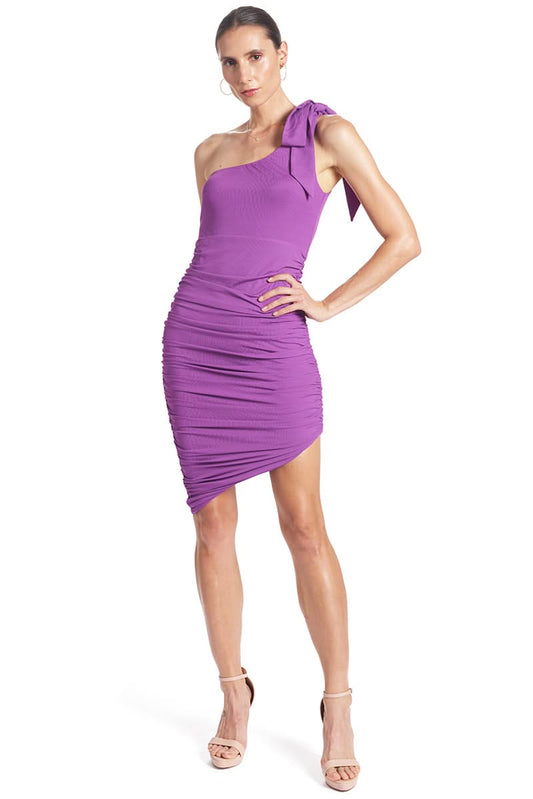
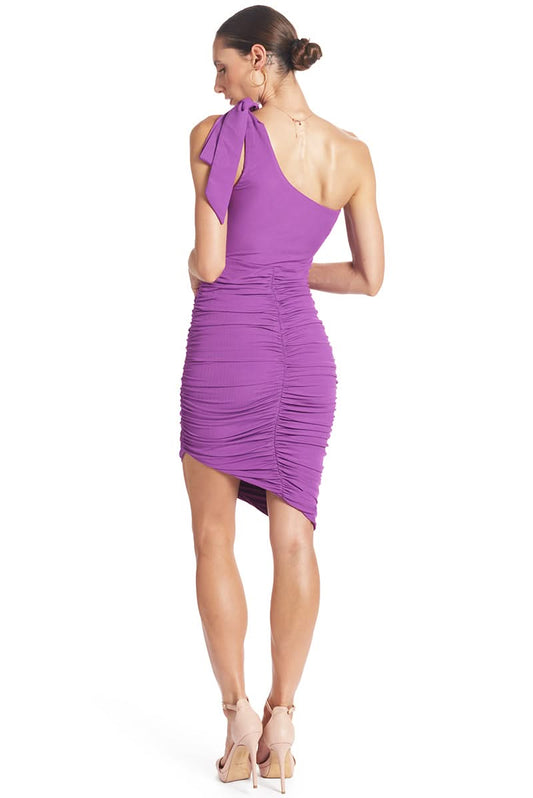
The Tuxedo Midi Dress: Deliberate Style with a Point of View
What Makes a Tuxedo Dress Different
The tuxedo midi dress is one of the few garment categories in women's fashion that borrows its authority directly from menswear without being derivative of it. The tuxedo reference, whether expressed through a contrast lapel, a whisper of mesh, sharp color blocking, or the classic black and white palette, signals a specific kind of confidence: structured, deliberate, and entirely uninterested in seeking approval.
What separates a well-made tuxedo dress from one that merely uses the label is the quality of the illusion it creates. The best versions use fabric, color, and cut together to suggest the architecture of a tuxedo without replicating its actual construction. The result looks more intentional than a literal interpretation would, and it wears more comfortably.
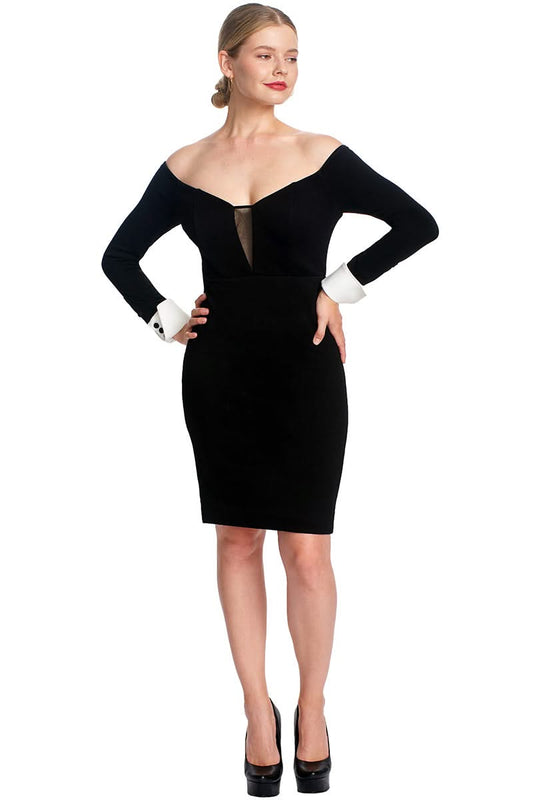
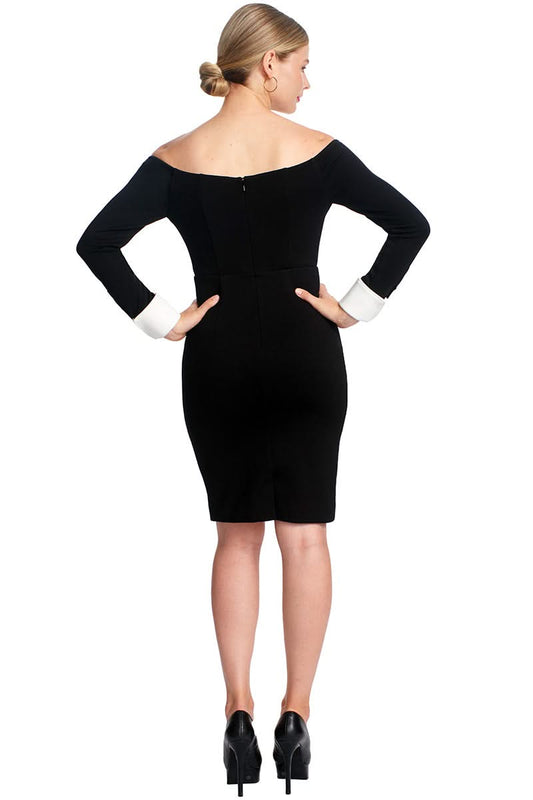
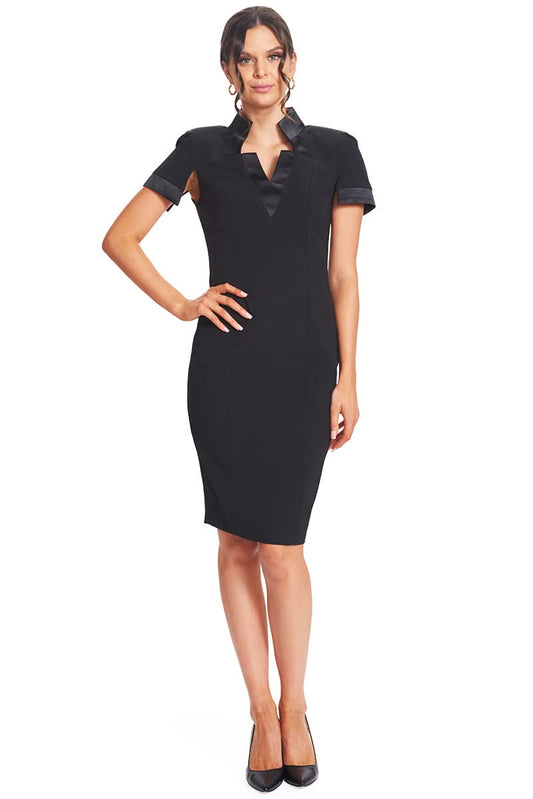
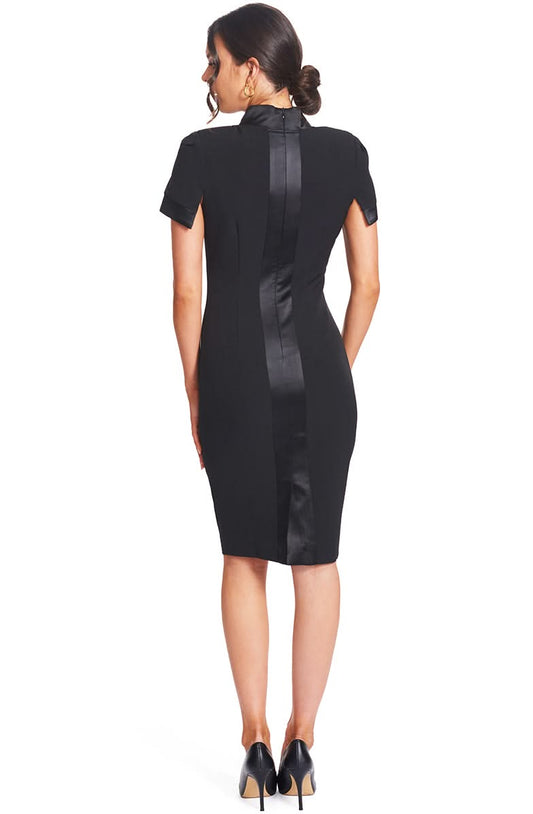
Our Tuxedo Illusion Sheath Dress works on exactly this principle. The black and white contrast does the structural work. The sheath silhouette does the rest. Together they create a dress that commands a room without requiring the wearer to explain itself.
The Tuxedo Dress: Where the Reference Comes From
The tuxedo suit entered mainstream menswear in the late nineteenth century as a less formal alternative to white-tie dress. By the mid-twentieth century, women's fashion had begun borrowing its codes: the strong shoulder, the contrast lapel, the crisp black and white palette, and the sense of authority that came with all of it.
What made the tuxedo translate so effectively into women's dressing was that it offered something the existing vocabulary of women's formalwear often lacked: structure without ornamentation. Feminine formalwear at the time was largely organized around embellishment, softness, and decorative detail. The tuxedo offered a clear alternative: clean lines, strong contrast, and presence achieved through precision rather than decoration.
That original appeal has not changed. The tuxedo reference in womenswear continues to signal the same thing it always has: that the wearer chose authority over ornamentation, and is entirely at ease with that decision. A tuxedo dress makes that statement quietly, which is part of why it persists as a wardrobe category across every decade.
Why Black and White Works as a Tuxedo Palette
Black and white is not a neutral combination. It is a graphic one, and the distinction matters. Where a single neutral color recedes, black and white creates contrast that draws the eye directly to the structure of the garment. The silhouette becomes the statement.
This is why the black and white tuxedo dress rewards precise construction more than almost any other garment type. Every seam is visible. Every line of contrast reads as intentional. A poorly executed seam in a monochrome dress is hidden in a way that it simply is not in a high-contrast garment.
From a practical standpoint, black and white also functions as a complete palette. It does not need additional color to read as finished. Accessories can be metallic or monochromatic, but even without them, the dress holds. This is the color logic behind classic eveningwear: a combination that performs whether the wearer adds to it or not.
There is also a wearability argument here. A strongly colored dress in a saturated tone can feel season-specific or occasion-specific in a way that black and white does not. A tuxedo dress in this palette can appear at a summer gala, a holiday party, a spring cocktail event, or a fall dinner without ever feeling out of place.
The Illusion Technique: The Detail That Makes the Difference
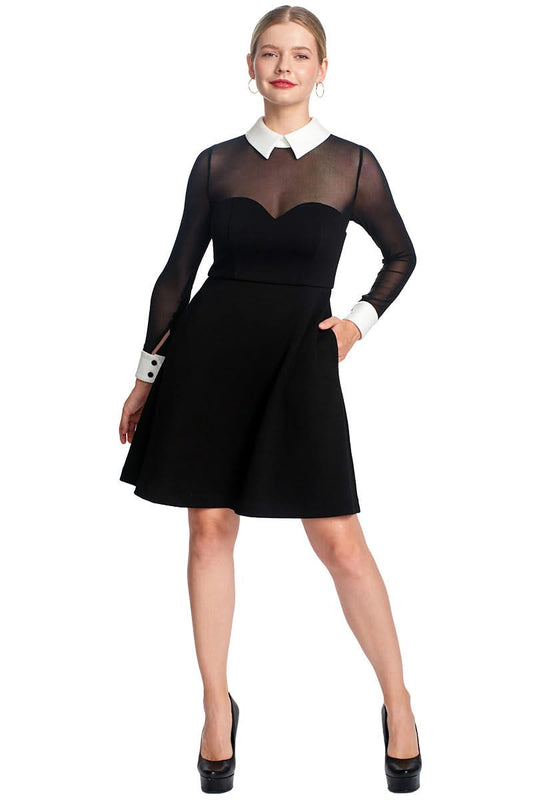
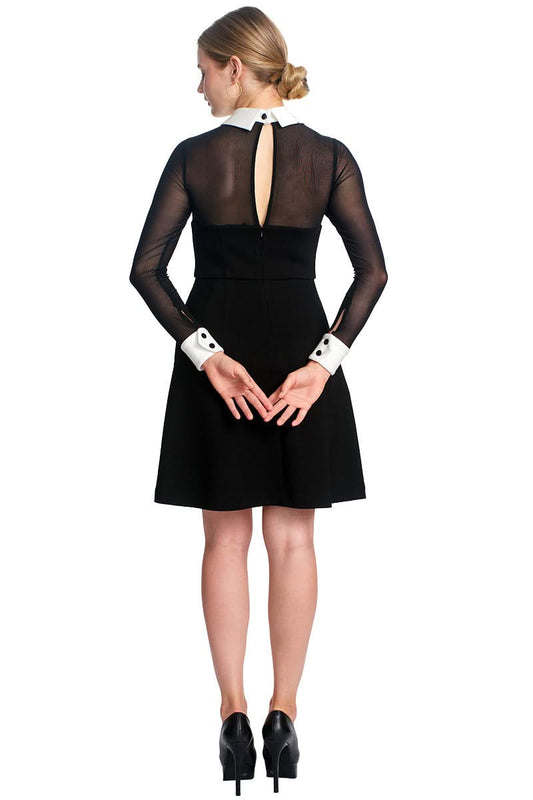
The illusion technique is a design approach that uses sheer fabric to create the appearance of skin while adding depth, dimension, and architectural interest to a garment. In the Tuxedo Illusion Dress, a carefully placed sheer mesh inset creates a subtle illusion effect that draws the eye without revealing too much. The result is sophisticated, modern, and effortlessly alluring.
Rather than relying on embellishments or excessive cutouts, the illusion mesh introduces contrast and visual intrigue while preserving the dress's sleek, tailored silhouette. Inspired by classic tuxedo styling, the design balance’s sharp structure with feminine refinement, creating a look that feels both powerful and elegant.
What makes this technique truly successful is precision. The illusion mesh must be expertly pattern-cut and perfectly integrated into the garment so it lies flat, moves naturally with the body, and blends seamlessly into the overall design. When executed well, the effect appears effortless, enhancing the architecture of the dress while maintaining exceptional comfort and wearability.
The beauty of illusion design lies in its subtlety. It doesn't demand attention; it earns it through thoughtful craftsmanship. In the Simona Maghen Tuxedo Illusion Dress, the sheer mesh inset serves as a refined focal point, proving that sometimes the most impactful design details are the ones that whisper rather than shout.
The Sheath Silhouette in a Bold Graphic Dress
The sheath is the correct silhouette for a tuxedo dress for the same reason it is the correct silhouette for a strong color: it contains the design energy rather than dispersing it. A flowing or gathered silhouette in a high-contrast palette creates visual noise. A sheath creates focus.
The fitted line of the sheath also reinforces the authority that the tuxedo reference is designed to project. Volume and movement suggest approachability and ease. A sheath suggests precision and intention. For a dress built around a menswear-derived graphic palette, precision is the right signal.
The midi length adds a layer of occasion range that a shorter version of the same dress would not have. A tuxedo mini reads as fashion-forward but narrows the occasion field. A tuxedo midi reads as formal enough for a gala, appropriate for a cocktail reception, and sharp enough for an upscale dinner event, all without changing the dress.
|
Design Element |
What It Contributes |
|
Black and White Palette |
Graphic contrast, complete without added color, seasonless |
|
Illusion Technique |
Adds depth, dimension, and architectural interest to a garment. |
|
Sheath Silhouette |
Contains the design energy, projects precision and authority & adds an air of sophistication |
|
Midi Length |
Expands the occasion range while maintaining formal weight |
How to Style a Black and White Tuxedo Dress
The styling principle for a tuxedo dress is restraint. The dress is already doing significant visual work. Accessories should create conditions for it to land clearly, not add competing layers.
Footwear
• Black pointed-toe heels are the classic and most reliable choice
• White heels lean into the palette and keep the look graphic
• Red heels can lend themselves to be a bold, yet fun and playful contrast look.
• Metallic silver or gold sandals work for evening occasions with warmer or cooler tones respectively
• Avoid prints & patterns, which interrupt the monochrome logic
Jewelry
• Silver or white gold jewelry reads crisper against a black and white palette than yellow gold
• A simple diamond or crystal stud, or a delicate drop earring, is sufficient
• A thin cuff or bracelet adds polish without weight
• Avoid heavily embellished or ornate jewelry, which conflicts with the clean graphic of the dress
Bags
• A black satin or leather clutch is the most formal pairing
• A white clutch reinforces the palette for a more editorial look
• A red clutch, same as the shoes can lend itself to be a bold, yet fun and playful contrast look.
• Metallic mini bags work for evening occasions
• Keep the bag small and structured; avoid casual or oversized silhouettes
Outerwear
• A fitted black blazer or tuxedo jacket extends the menswear reference deliberately
• A white or ivory wrap coat creates a tonal effect that reads as very considered
• Avoid heavily patterned or brightly colored outerwear, which breaks the graphic cohesion
Occasions This Dress Is Built For
The tuxedo midi dress sits at the formal end of the occasion spectrum, but its precision keeps it from being one-dimensional. Here is how it maps to specific events:
|
Occasion |
Fit |
Notes |
|
Gala or Formal Dinner |
Excellent |
Black and white reads as formal without color |
|
Holiday Party |
Excellent |
Timeless palette works across all holiday dress codes |
|
Cocktail Reception |
Excellent |
Midi length and sheath are occasion-perfect |
|
Corporate Awards Event & Charity Events |
Strong |
Tuxedo reference reads professional and authoritative |
|
Upscale Birthday Celebration |
Strong |
Graphic palette makes a clear statement |
|
Wedding Guest (Evening) |
Strong |
Black and white is accepted at most evening weddings |
|
Casual Daytime Event |
Not ideal |
The dress is built for formal and semi-formal settings |
The one occasion to navigate with care is a wedding where the couple has not indicated a preference on black or white for guests. For evening weddings with a formal dress code, a tuxedo midi dress is generally appropriate. For afternoon or outdoor weddings, confirm with the couple first.
Presence without Decoration
The tuxedo midi dress works because it borrows its authority from one of the most enduring design codes in fashion and translates it into a garment that is entirely wearable across the occasions where presence matters.
The black and white palette is not a trend decision. It is a graphic choice that functions independent of season, color cycle, or current editorial direction. The sheath silhouette and illusion construction complete the picture: a dress that reads as considered at every level of design without requiring the wearer to explain it.
For the occasions where the right dress is the one that handles the room before you say a word, this is the one we reach for.
Frequently Asked Questions
Q. What is a tuxedo midi dress?
A tuxedo midi dress draws design inspiration from the men's tuxedo suit, typically through contrast color blocking, lapel-style detailing, or a structured front placket rendered in fabric rather than actual tailoring. A black and white palette is most common. The midi length positions it in the formal to semi-formal occasion range.
Q. Can a black and white tuxedo dress be worn to a wedding?
At most formal or evening weddings in the United States, yes. Black and white is widely accepted as a guest dress code at upscale events. For afternoon or outdoor ceremonies, it is worth confirming with the couple. The tuxedo reference adds authority without competing with bridal color.
Q. What shoes work best with a black and white tuxedo dress?
Black pointed-toe heels are the most reliable pairing. White or ivory heels lean into the monochrome palette. Metallic sandals, particularly silver, work well for evening. Avoid bright accent colors and casual footwear styles, which work against the graphic formality of the dress.
Q. What is an illusion sheath dress?
An illusion sheath dress uses color placement and pattern to create the visual impression of a structural design element, such as a tuxedo front or layered garment, without physically constructing those elements. The result is a cleaner, more comfortable wearing experience that retains the visual impact of the intended reference.
Q. Is a tuxedo dress appropriate for work?
In most professional environments, yes. The black and white palette and structured silhouette read as polished and authoritative. It is particularly well-suited for high-stakes meetings, presentations, or client-facing events where presence and professionalism are both important.
Q. How do you accessorize a black and white dress without it feeling generic?
Choose one strong accessory and keep everything else minimal. A distinctive earring, an unusual clutch shape, or an interesting shoe silhouette adds personality without disrupting the graphic clarity of the palette. The aim is to add one point of interest, not to add volume to what is already a complete look.